The new Hezbollah drone threat is unsettling Israel
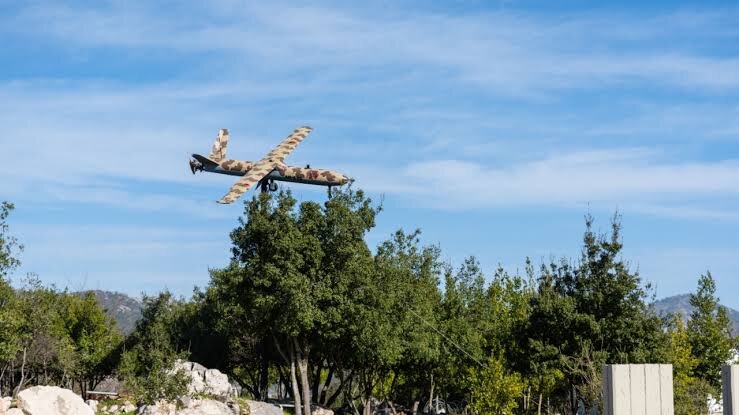
TEHRAN – Hezbollah’s loitering attack drones are now treated in the Israeli media discourse as a central and prominent challenge to the regime’s military.
A review of Hezbollah’s six statements in 24 hours reflects this. Five statements reveal that gatherings of Israeli Occupation Soldiers (IOF) and tanks have been targeted with loitering drones, achieving direct hits. The sixth statement said the Lebanese resistance shot down an IOF Hermes 900 drone with a surface-to-air missile.
A tangible, low-cost, and highly adaptable shift is emerging on the battlefield. Loitering attack drones are no longer seen in the regime’s media as a secondary addition to a broader arsenal of rockets and artillery, but as a significant component in their own right.
In recent weeks, a different description has emerged: the IOF is facing a clear battlefield transformation, where Hezbollah’s relatively small and highly flexible weapon has shown clear technological superiority.
From the Zionist regime’s perspective, the matter is no longer seen as a “tactical nuisance,” but as a weapon that has begun to alter certain rules of engagement. Suicide drones, especially those operating with fiber-optic (FPV) technology, are presented as a nontraditional operational problem, since they do not rely on wireless signals or GPS systems, making electronic jamming methods ineffective.
This reality, according to analysts, places the regime’s defense systems before an unfamiliar gap. The weapon does not fully fit within conventional aerial threats, which the regime had designed to counter, nor can it be treated as a classic ground threat.
The result, as portrayed in Hebrew media, is an operational “gray zone” that is difficult to control with available military resources.
One of the most prominent consequences highlighted by Israeli commentators is the impact of these drones on the so-called “security belt” idea. This concept was based on pushing direct threats to the IOF, especially anti-armor missiles, farther away by creating relatively safe geographic depth in Lebanese territory.
However, loitering attack drones bypass that assumption entirely. They do not require close positioning or a direct line of sight, and can be launched from greater distances with maneuverability that overcomes calculations underlying the concept of distance.
Therefore, geographic depth is no longer a strong protective factor and has become significantly less influential.
Although the regime’s concern about this weapon predates the “Taybeh incident” when Hezbollah used a swarm of loitering drones that destroyed six IOF tanks and other military vehicles, the event is used in Israeli regime media discourse as a reference point for this shift.
Hezbollah’s Taybeh operation did not stop at targeting an IOF ground unit, but also included the evacuation phase, with additional strikes hitting IOF rescue forces and even a military helicopter.
The Zionist regime’s analysis highlights a key point: the loitering drone is no longer just a strike tool, but a means to disrupt the entire “military workflow chain”, from engagement to rescue. This expansion in impact raises the weapon’s value despite its relative simplicity.
Some analyses by the occupation regime go further, suggesting that these drones could serve as a partial alternative, or at least an effective complement, to anti-armor missiles. They are cheaper, more flexible, and do not require complex or easily exposed launch infrastructure.
Their main drawback is a smaller explosive payload. However, according to the regime’s commentary, this still gives Hezbollah the ability to maintain sustained operational pressure at a higher tempo, while reducing the logistical risks associated with heavier weapons.
The regime’s media analysis does not hide the sense of confusion. There is acknowledgment that the IOF did not keep pace with this threat quickly enough, and that serious engagement with it began only after human losses were incurred.
Even more striking, as presented in the media, is the paradox between distant and near capabilities: the Zionist regime, which speaks of alleged freedom of military action in distant skies, struggles to intercept small drones along its northern settlements.
Part of the problem, according to Hebrew media, is not only technical but organizational. There is a debate between the Air Force and the Northern Command over who is responsible for addressing this threat.
Loitering drones fall between two classifications: they are neither a “classic aerial target” nor a purely “ground threat.” This ambiguity affects command and control mechanisms and delays the development of a unified and effective response.
Scenes of IOF soldiers attempting to shoot down small drones with individual weapons are used in Hebrew media as evidence of disrupted expectations: an “advanced army” confronting a simple threat with relatively primitive tools. Moreover, the drones’ self-filming and live-broadcast capabilities add a sensitive media dimension, reducing the margin for denial or control of the military narrative.
Hezbollah’s military media is publishing footage of these attack drones with cameras attached targeting IOF positions daily.
Facing this challenge, the IOF’s security establishment is working to develop various solutions: interception nets, specialized munitions, portable radars, smart optics, and even interceptor drones.
However, the prevailing assessment, as reflected in Hebrew media, is that these solutions remain partial. Some even describe the situation as an “open arms race,” where any defensive innovation can quickly be met with a low-cost offensive adjustment based on accessible civilian technologies.
The newspaper Haaretz acknowledged that the IOF lacks effective solutions for “explosive drones,” noting that Hezbollah is also using quadcopter drones in this war that are difficult to detect or jam.
The paper’s military correspondent quoted an IOF soldier saying that the drone “waits in the air or on rooftops, and explodes above forces as soon as movement occurs,” making “every movement in open areas a risk, including contractors demolishing houses.”
The correspondent added that Hezbollah is currently using drones “connected by fiber optics, which have several advantages over (IOF) detection and interception systems,” as these drones are “silent and emit no signals,” making them hard to detect or jam using existing electronic capabilities.
It has become evident that the Zionist regime, which has announced new casualties amid its war in Lebanon, is incapable of finding a solution to Hezbollah’s drone capability. The latest surprise in Hezbollah’s military arsenal: Fiber-optic drone technology can reach places where the regime’s fixed detection systems cannot intercept.
The Lebanese resistance now also possesses imaging and intelligence-gathering capabilities, which help it identify Zionist regime targets. The regime’s frustration has become evident as it blows up entire southern Lebanese villages, a clear sign of its inability to defeat Hezbollah in ground combat.
Leave a Comment